
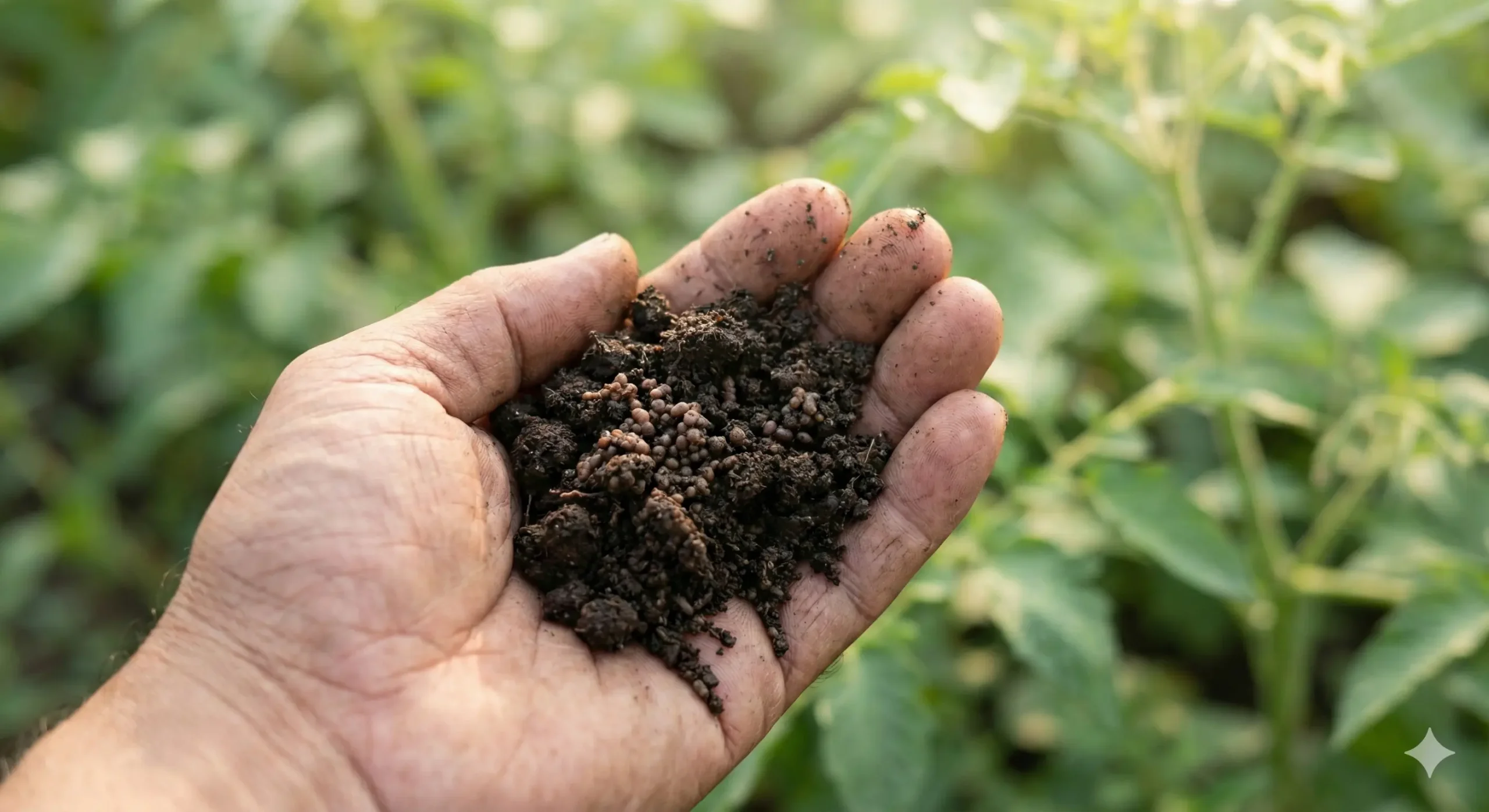
Description
Vermiwash is collected by letting water trickle slowly through a live bed of earthworms and compost. It carries soluble nutrients and microbes from the bed, and natural farmers traditionally use it diluted as a foliar spray for vegetables, nursery plants and fruit trees.
We don’t sell Vermiwash. We sell vermicompost; vermiwash is something you can collect yourself from a small barrel unit at almost no cost. If you’d like to see one set up, request a farm visit.
What you need (small barrel unit)
| Drum or barrel (100–200 litres) | with a tap fitted near the bottom |
| Broken bricks / gravel | layer of 10–15 cm |
| Coarse sand | layer of 10–15 cm |
| Partly decomposed cow dung + farm waste | layer of 30–45 cm |
| Earthworms (red wigglers / Eisenia) | a few hundred to start |
| A pot with a small hole | hung above as a slow drip |
How to prepare
- Fit the tap and keep it open at first. Build the layers in order: bricks, sand, then the dung/compost layer.
- Release the earthworms onto the top layer and cover with a thin layer of straw.
- Keep the unit moist (not waterlogged) in the shade for 10–15 days while the worms settle.
- Close the tap. Hang the drip pot above and fill it with water each day so it trickles through overnight.
- Open the tap in the morning and collect the vermiwash — typically a few litres a day.
How to use
- Foliar spray: about 1 litre of vermiwash in 10 litres of water, filtered, sprayed in the evening.
- Some farmers add about 1 litre of cow urine to the same mix.
Storage & shelf life
Best used fresh, within a few days. Store in a shaded, covered container.
Good practice
- Keep the unit shaded and moist; earthworms dislike heat and direct sun.
- Always dilute before spraying and test on a few plants first.
Shared as traditional natural-farming knowledge. Results vary with the compost bed, crop and climate. This is not a registered fertiliser and no specific outcome is promised.

Reviews
There are no reviews yet.