
Description
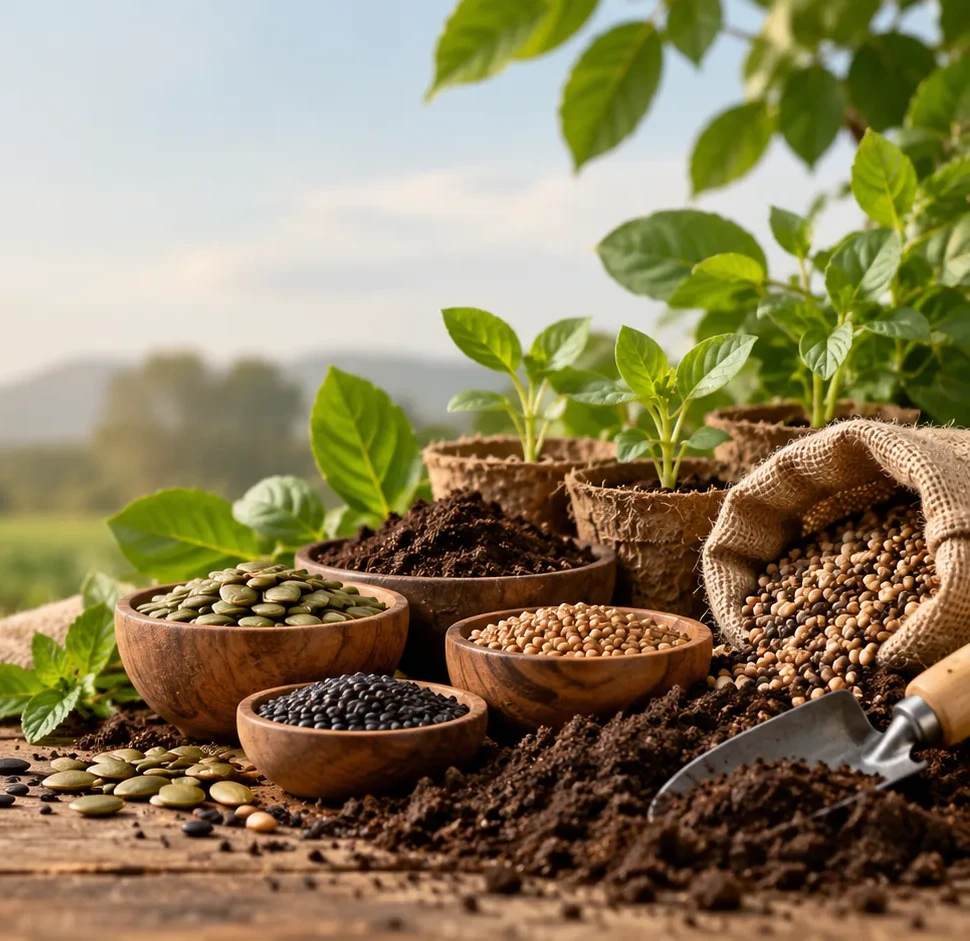
Ghanjeevamrit (“ghan” means solid) carries the same microbial idea as liquid Jeevamrit, but in a dry, crumbly form that can be stored and spread by hand. Farmers traditionally use it as a basal application at sowing, in nursery beds and in tree planting pits.
We don’t sell Ghanjeevamrit. It is simple to make in bulk from dung you already have. Prepare it on your farm at almost no cost, and if you’d like to see it done, request a farm visit.
Ingredients (one batch, about 1 acre)
| Desi cow dung (fresh or partly dried) | 100 kg |
| Jaggery | 1 kg |
| Pulse flour (besan or any pulse) | 1 kg |
| Live soil from your farm bund | 1 handful |
| Desi cow urine | about 5 litres, sprinkled as needed |
How to prepare
- Spread the dung on a clean floor in the shade.
- Sprinkle the jaggery (dissolved), pulse flour and soil over it.
- Sprinkle cow urine a little at a time and mix thoroughly by hand or spade until it is evenly moist, not wet.
- Heap it and cover with a jute sack for about 48 hours.
- Spread it thin in the shade to dry, turning occasionally.
- Once dry, break the lumps into a coarse powder and pack in jute bags.
How to use
- At sowing: about 200 kg per acre, broadcast and mixed into the topsoil.
- Planting pits: a double handful (about 0.5–1 kg) per pit for saplings.
- Top-up: a handful around each plant at flowering, followed by light irrigation or Jeevamrit.
Storage & shelf life
Kept dry in jute bags, in the shade, it stays usable for around 6 months.
Good practice
- Dry it in shade, never in harsh sun, so the microbes survive.
- Apply to moist soil and mulch afterwards.
- Try it on a small plot first.
Shared as traditional natural-farming knowledge. Results vary with soil, climate, crop and preparation. This is not a registered fertiliser and no specific yield outcome is promised.

Reviews
There are no reviews yet.